
 English
 Español
 Français


How inclusive greenway infrastructure can have direct and positive effects on climate change, biodiversity and the wider environment.
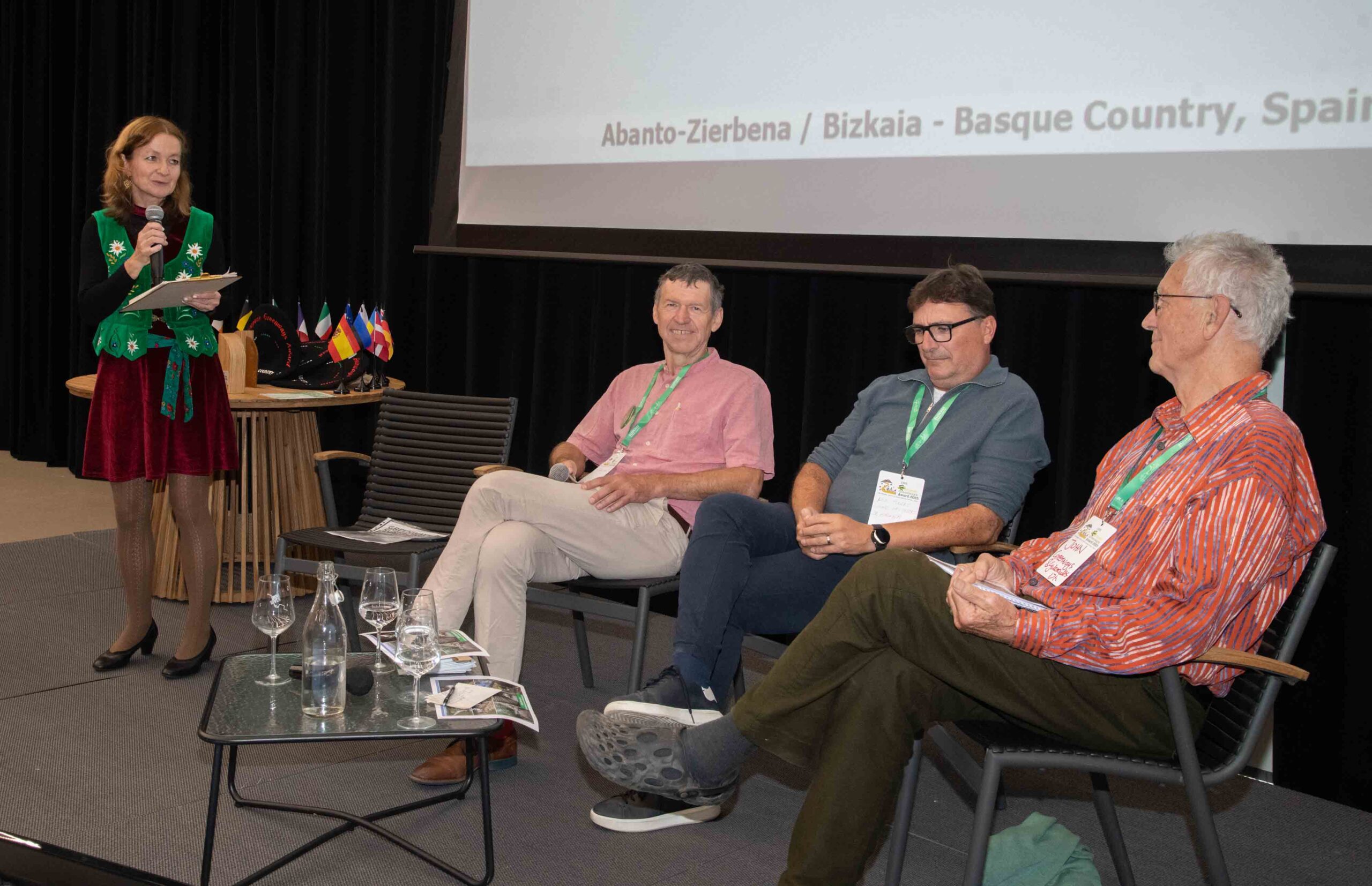
Interview with Philippe Marchina, treasurer of the French Association for the Development of Greenways and Cycling Routes AF3V, speaker of the European Greenways Conference in Abanto-Zierbena, Basque Country, Spain.
by Dominika Zaręba
One of the main challenges in France regarding greenways and cycling infrastructure is the quality of cycling and greenway facilities, in urban as well as rural areas, also in reference to environmental measures. Could you share your thoughts on this, particularly in relation to the booklet Greenways Surfacing. Challenge preconceived notions for an eco-friendly choice published by your organization?
Thank you very much for this introduction. The publication you mentioned was prepared together with another French organization, France Nature Environnement. It focuses on the best ways to surface a greenway. When we talk about the “best” solution, we recognize that a compromise has to be found between cost, environmental impact, accessibility, and user-friendliness. High-quality means greenways that are direct, continuous, comfortable, and safe. Because when we speak of greenways, most people think of cycling, but we should not forget wheelchairs, children trolleys etc. All those considerations have to be taken into account in the design of Greenway, and especially the surfacing of a greenway.
In the booklet’s introduction we can read that: “During a long time, gravel surfacing matched with the green image of cycling. (…) On the contrary, an asphalt greenway was perceived as a road with all its negative features. But now, experience feedback, studies and improvement of products used fight against popular belief”.
Typically, there are three main types of materials used for greenway surfacing: 1) sand-based surfaces, which are usually compacted, reinforced, or slightly cement-bound; 2) asphalt; and 3) concrete. We conducted a study taking into account all the relevant factors, including durability, cost, environmental impact, and user comfort. The results showed that asphalt offers the best overall compromise.
Compared with gravel surfaces, asphalt offers clear advantages in terms of user safety, riding comfort, and long-term durability. Moreover, when light-coloured aggregates and transparent binders are used, asphalt can blend well into the surrounding landscape and, over its life cycle, can have a comparatively low environmental impact. We believe that bitumen-bound asphalt is the way forward for greenways. This includes asphalt using either synthetic or bio-based binders. Our studies show that this solution offers significant potential for reducing the carbon footprint and limiting water pollution, while providing a more sustainable and durable surfacing solution for greenways.
You mentioned that, as an avid cyclist, you believe cycling tourism contributes to the Sustainable Development Goals and helps reduce CO₂ emissions.
A significant modal shift towards cycling, supported by inclusive and accessible infrastructure, can have direct and positive effects on air quality, noise pollution, and climate change, while also benefiting biodiversity and the wider environment.
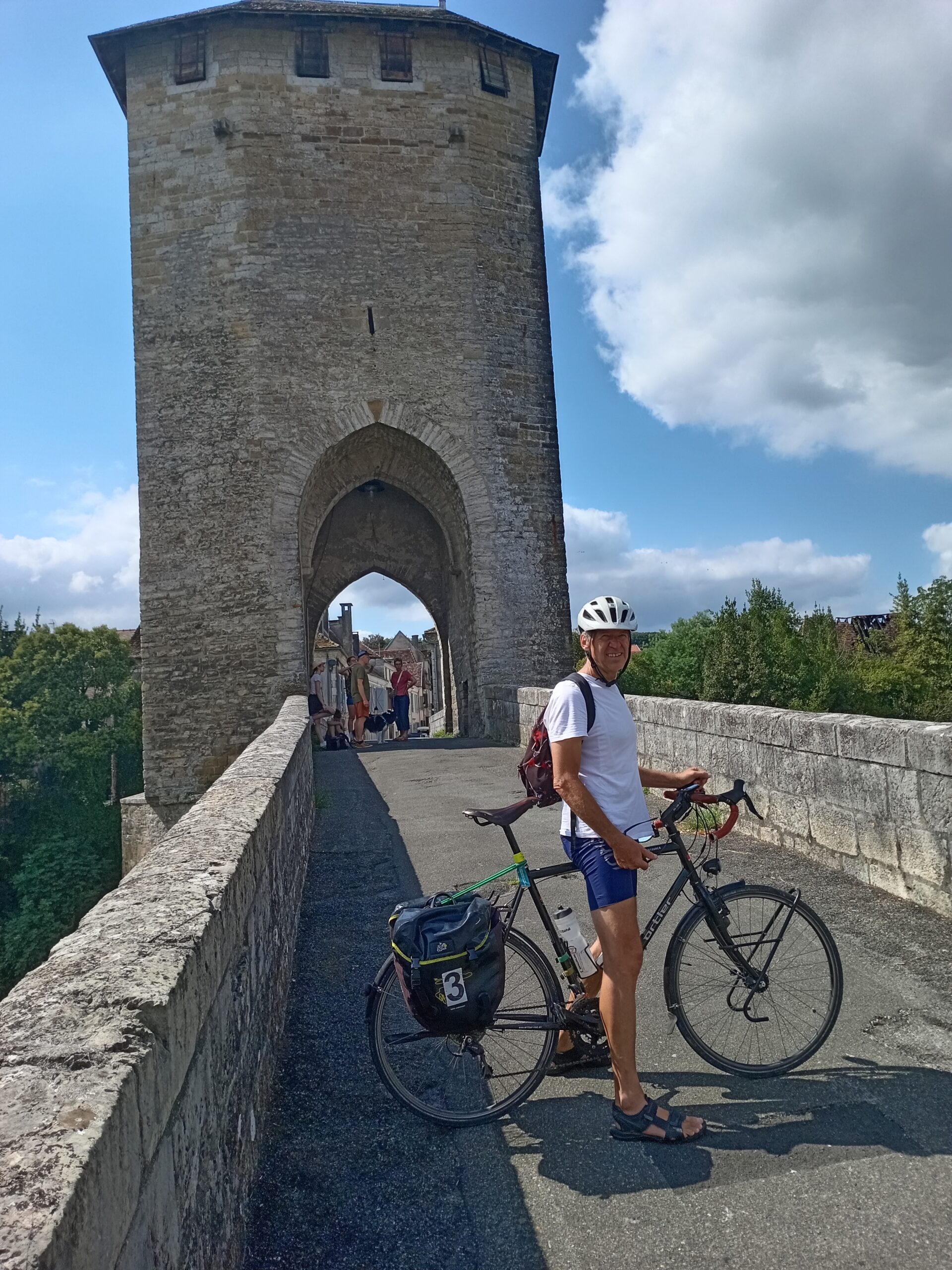
Also, and that is my personal experience or that of the tourists I host, cycling changes the way you perceive time. When cycling, whether you commute to work or ride for tourism, time develops at a more peaceful pace, allowing you to enjoy the environment you pedal through, (even in an urbanised one!).
This specific perception of time and space tends to change to some degree your vision of the world we live in and stimulates the need to slow down, or at least take a different look at our modern lifestyle where ‘more’ and ‘faster’ is always better. Moving away from the commercial pressure we are constantly exposed to, we minimize our – negative – impact on ourselves and CO2 emissions in the first place.
How can a critical mass be created to encourage local communities to develop greenways?
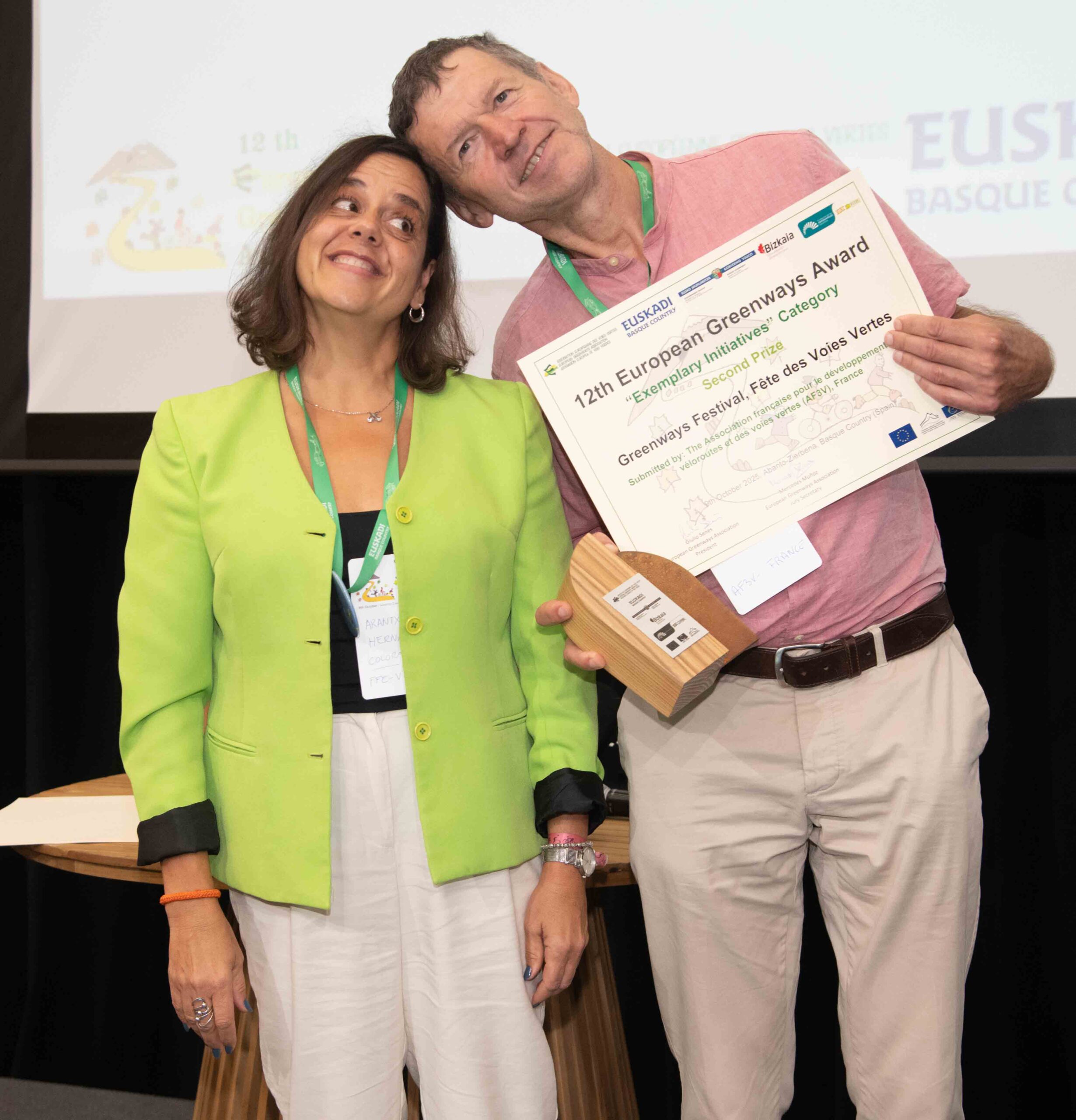
Our organization AF3V has been organizing the umbrella event called Greenways Festival – Fête des voies vertes – in order to foster initiatives around greenways, whatever form they might take. It could be a group ride, an advocacy action calling for new greenways, a conference, a photo exhibition, or any other event related to greenways. What we see is that events are being organized around greenways all across France. The initiative coordinates around 100 events across metropolitan France, all centred around Greenways and active mobility. As an association, what we do is bring together information from the different organizers and provide them with communication kits and materials. We also open our website to them so that they can promote their events. This is usually a great success, and we receive very positive feedback from both the organizers and the participants. We are happy that the Greenways Festival was distinguished with the European Greenways Award.
How do you see the role of EGWA – the European Greenways Association – and its members in creating a critical mass for greenways and cycling routes?
This was my first participation in an EGWA conference, and I realized how valuable the links we can develop, as national greenway associations, can be with other members. I think such events provide a very good basis for building professional relationships that will hopefully allow us to connect even more closely and interconnect our respective greenway networks, making them more visible and appreciated by local communities.
What is your hope or a dream regarding cycling and greenways?
The growth of bike tourism is a good sign of a developing awareness of the need for a change in our day-to-day lifestyle and it starts with the way how people spend their free time. I just hope this trend will continue to go up and extend beyond the holiday season. At least, at my modest level, I try to push it that way!
Thank you very much, Philippe. It was a privilege to have you as a speaker at the International Greenways Conference.
October 2025 & August 2026
More information:
www.af3v.org, www.facebook.com/af3v.org, x.com/AF3V_officiel

*AI was used for proofreading.