
 English
 Español
 Français


On November 4th, 2026 the European Commission presented a new EU Sustainable Tourism Strategy.
The Commission staff working document includes explicit references to Greenways recognising the important contribution of greenways to sustainable mobility, environmental transition as well as active and balanced tourism development.
By integrating greenways into Europe’s wider transport and recreational networks, the European Greenways Association can help advance the EU’s objectives of decarbonising tourism, improving connectivity between urban and rural areas, promoting nature-based and cultural tourism, and strengthening local communities.
Greenways demonstrate how the reuse of existing infrastructure can create lasting environmental, social and economic benefits. Their contribution to sustainable mobility, cross-border connectivity and tourism diversification reinforces their strategic importance for Europe’s transition towards a more sustainable, accessible and resilient tourism ecosystem.
EGWA therefore sees the strategy as an important opportunity to strengthen the recognition of greenways within European tourism and mobility policy and to encourage further cooperation between European institutions, national and regional authorities, tourism stakeholders and greenways organisations.
Document: Tourism – A Key Asset for Europe: Towards an EU Sustainable Tourism Strategy.
The European Commission’s document recognises greenways as an important part of Europe’s sustainable tourism and mobility infrastructure.
Greenways contribute to several of the strategy’s central objectives:
- Decarbonising tourism transport.
- Encouraging walking, cycling and other active forms of mobility.
- Connecting urban and rural areas.
- Promoting nature-based and cultural tourism.
- Extending tourism beyond overcrowded destinations and traditional peak seasons.
- Supporting local communities, regional development and territorial cohesion.
The document specifically references European Greenways in its discussion of sport and outdoor tourism, alongside EuroVelo and European long-distance hiking trails. It also refers directly to the European Greenways Association (EGWA) as a source supporting the role of greenways in sustainable tourism.
This is significant for EGWA: greenways are not simply recreational routes or tourism attractions. They are recognised as infrastructure that can contribute to wider European environmental, transport, economic and social objectives.
Greenways as a foundation for sport and outdoor tourism
In Chapter 1.1.2, the document identifies sport, active and outdoor tourism as important elements of Europe’s tourism offer.
It explicitly mentions:
- EuroVelo.
- European Greenways.
- European long-distance hiking trails.
These networks contribute to sustainable mobility, cross-border connectivity and the attractiveness of destinations.
The Commission also notes that sport and outdoor tourism can help:
- Extend visitor flows beyond traditional peak seasons.
- Support local economies.
- Strengthen community identity.
- Promote natural and cultural heritage.
- Improve the resilience of tourism destinations.
This places greenways within a broader European tourism network rather than treating them as isolated local projects.
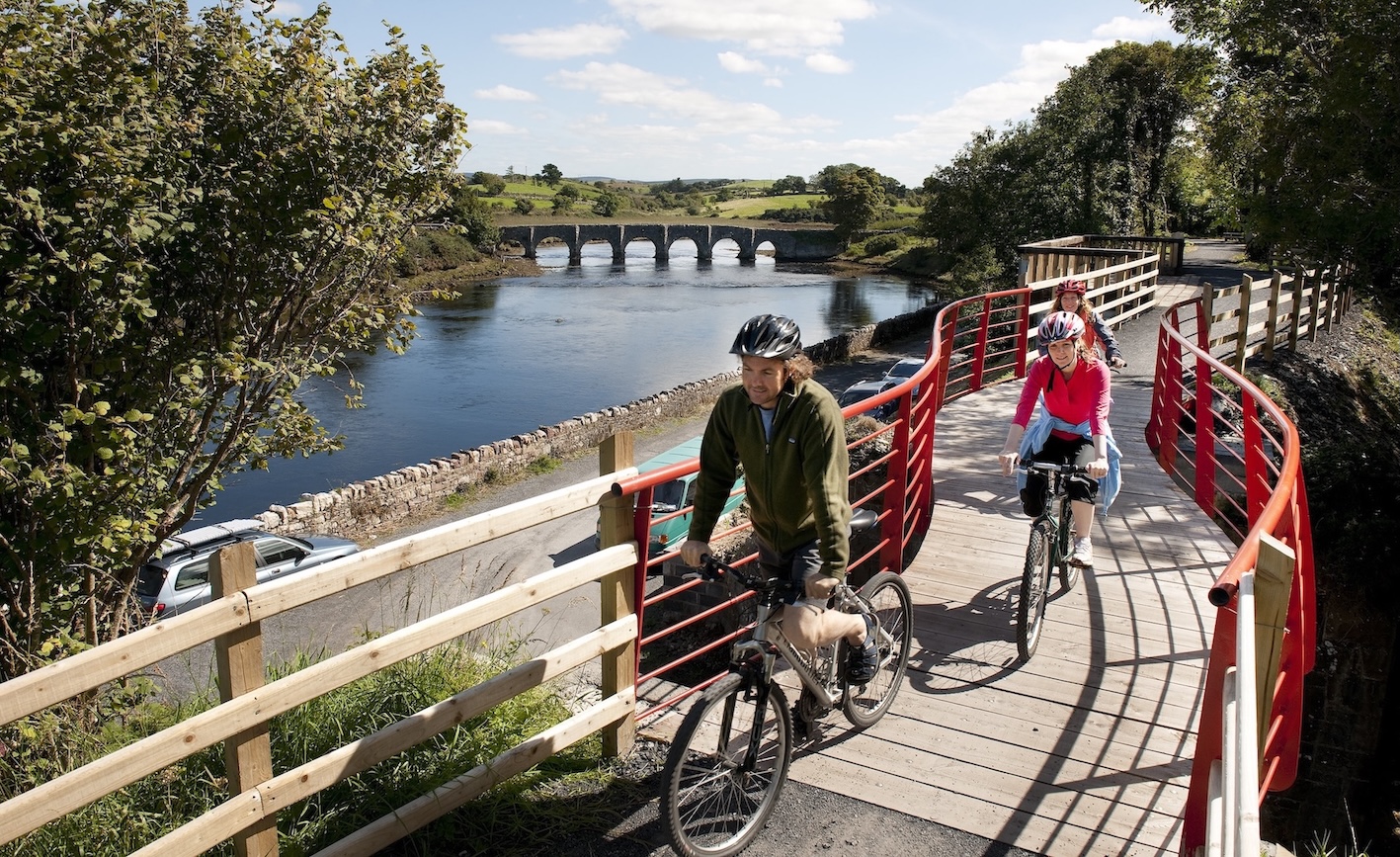
The Commission provides a concrete example from Ireland. The Great Western Greenway in County Mayo is presented as an example of sustainable infrastructure and circularity.
The document describes it as: a 48.5-kilometre coastal walking and cycling trail, located along the Wild Atlantic Way.. It is developed on a disused railway line. An example of infrastructure reuse with minimal environmental impact. It also highlights environmental innovation, including a boardwalk constructed over sensitive bogland, e-bike charging facilities, solar-powered waste bins and public furniture made from repurposed wind turbine blades. The example demonstrates how greenways can combine sustainable mobility, heritage reuse, biodiversity protection and circular economy principles.