
 English
 Español
 Français


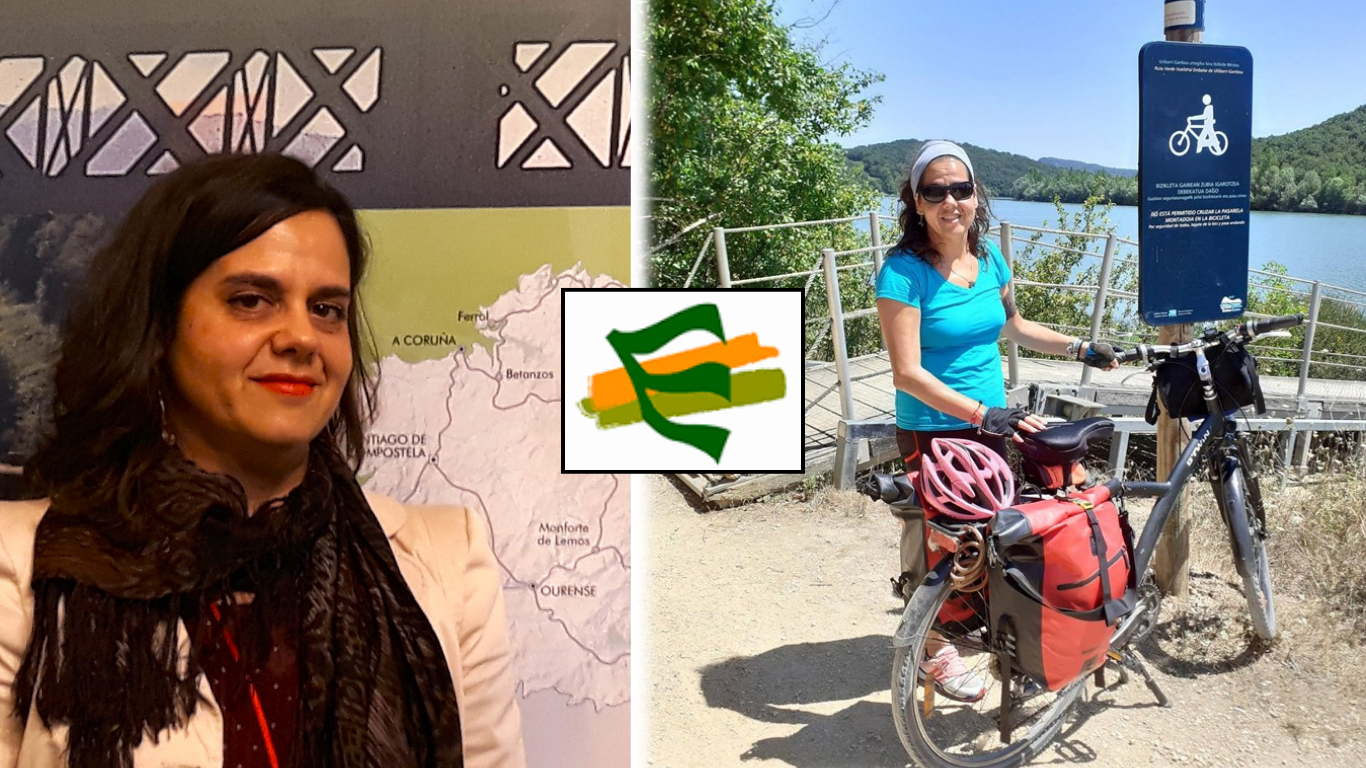
Interview with Arantxa Hernández Colorado, Greenways Manager at the Spanish Railway Foundation and Secretary General of the European Greenways Association
Tell us a little about the history of greenways in Spain and how Spain came to be one of the leaders in greenways in Europe and the world.
Thank you. I don’t know if we are leaders, but it is true that we have been working for more than 30 years. In 2023, we will celebrate 30 years of greenways, engaging in the recovery of old disused railway lines in Spain, which are now usedas new models for mobility and sustainable tourism. It all started in 1993 with an inventory where we saw that there were 7,600 kilometres of tracks that were no longer in use. Thanks to the institutional collaboration of many entities – from thestate sector, ministries, railway companies, regions, autonomous communities, and local councils – we have managed to achieve more than 3,500 kilometres of greenways in practically every province in the country today.
The driving force – “spiritus movens” behind the Greenways is the Spanish Railway Foundation. Is that correct?
Yes. The Spanish Railways Foundation is a public sector foundation under the Ministry of Transport and Sustainable Mobility. Our board of trustees includes railway companies such as ADIF (Railway Infrastructure Administrator), which are the ones that provide the land, routes, stations, etc. We also liaise with the central government, such as the Ministry of Agriculture, Fisheries and Food, the main investors in this infrastructure, as well as with local (municipalities and provinces) and regional administrations and territories. We work not only with destinations and public administrations, but also with local companies and those that are already marketing and providing services to new users of greenways. We also collaborate with citizen groups, the media and the third sector, such as organisations that promote accessible tourism for people with disabilities. Greenways are very cross-cutting in our country, both at the institutional and territorial levels.
What is your dream for greenways in Spain?
I think my own dream would be for us to have a network of greenways linked together by other types of non-motorised infrastructure, for cyclists or hikers. It’s true that it’s not easy because Spain is a very mountainous country, and greenways ensure accessibility and connectivity that other infrastructure cannot guarantee with the same criteria as these routes. I would like to see the greenways we have in Spain “woven together”. I have another dream, which is to be able to travel with bicycles on trains more easily and to be able to travel along all the greenways without difficulty, combining train and bicycle in an easy, natural way, as is the case in other countries in Europe and Central Europe. Furthermore, and since we are dreaming, it would be very important to have a real ‘Observatory’ of Greenways, which we are already starting, to provide us with data on the socio-economic impact of these routes. And, of course, the improvement of maintenance standards throughout the network.
And what is important for Europe? What would be the priority?
I believe it is important to strengthen the concept of what greenways are and to be able to differentiate them positively from other types of cycling infrastructure, because they have elements that make them different. It would be good for users and people who enjoy cycle tourism or hiking to be well aware that greenways, vías verdes, voie vertes or Portuguese ecopistas offer guarantees of accessibility, comfort, safety, etc. That ‘Vias Verdes/Greenways’ is a high-quality European brand. This is also the objective for all of us who make up the European Greenways Association.
It’s true that greenways are very unique. What would you say to people, to society in general, about why greenways are worth experiencing?
You will find a slow and peaceful ride that helps you understand the beauty of the places, the history of the sites, and all the culture and nature of areas that are not overrun with tourists. You will have a very pleasant experience and an unforgettable holiday. In my case, as I also travel with a young person with a disability, we have found in greenways a way to do something together as a family and enjoy outdoor tourism and active tourism, which is often difficult to find for diverse cycling families, as I call them. We have achieved this with European greenways. Greenways also help with the rural and local development of our towns and regions. Through greenways, local people can cycle every day, incorporate cycling into their daily habits and finally integrate cycling into their daily mobility in a natural way. Greenways undoubtedly contribute a lot to the culture of cycling, which is very important in the fight against climate change.
Thank you very much, Arantxa, for the interview.
Interview conducted by Dominika Zaręba
More information:
viasverdes.com


