English
 Español
 Français


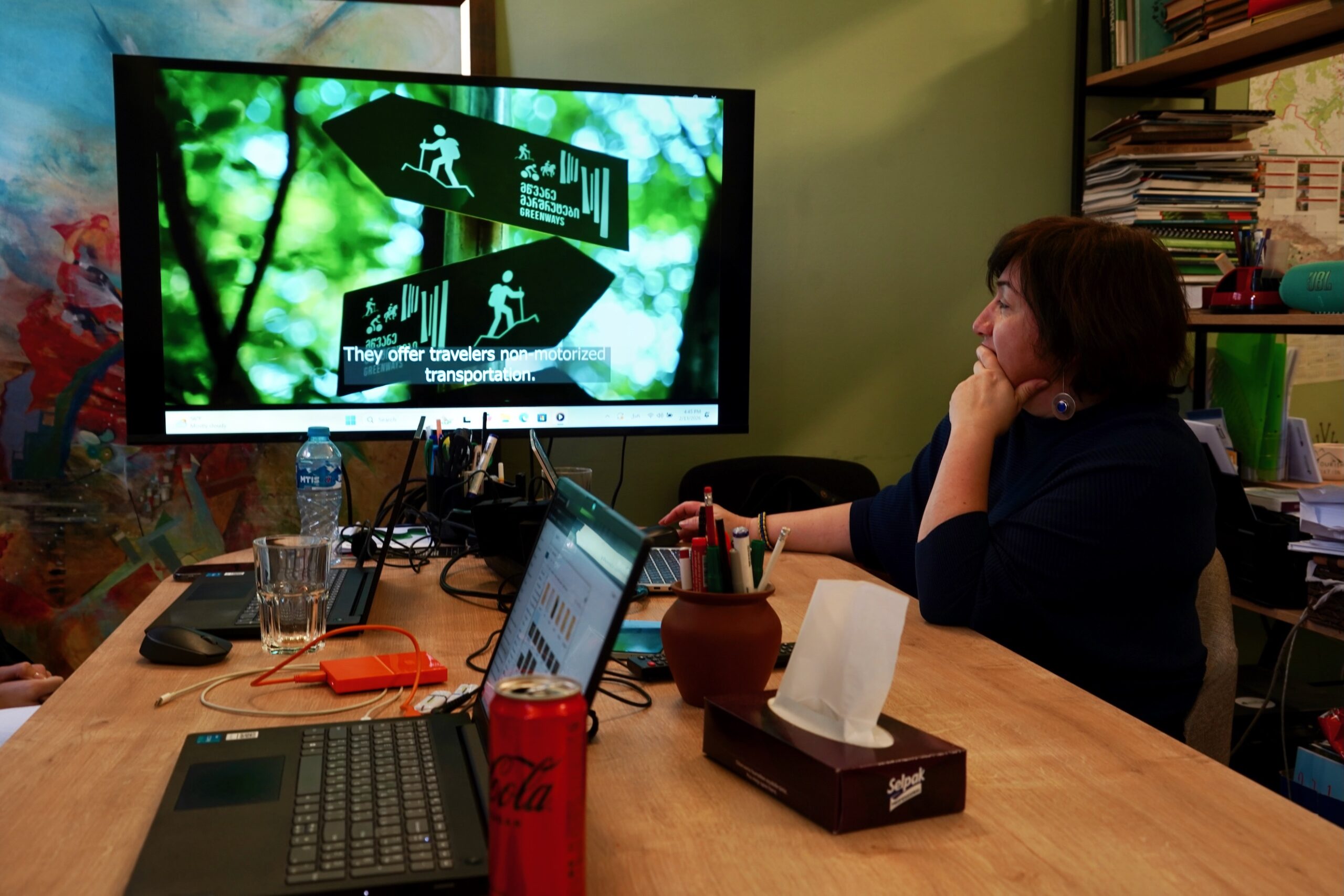
Interview with Natalia Bakhtadze Englander, chairwoman of the Georgian Ecotourism Association
by Dominika Zareba
/ Tbilisi, 13/02/2026
Telling Stories Through Ecotourism and Greenways
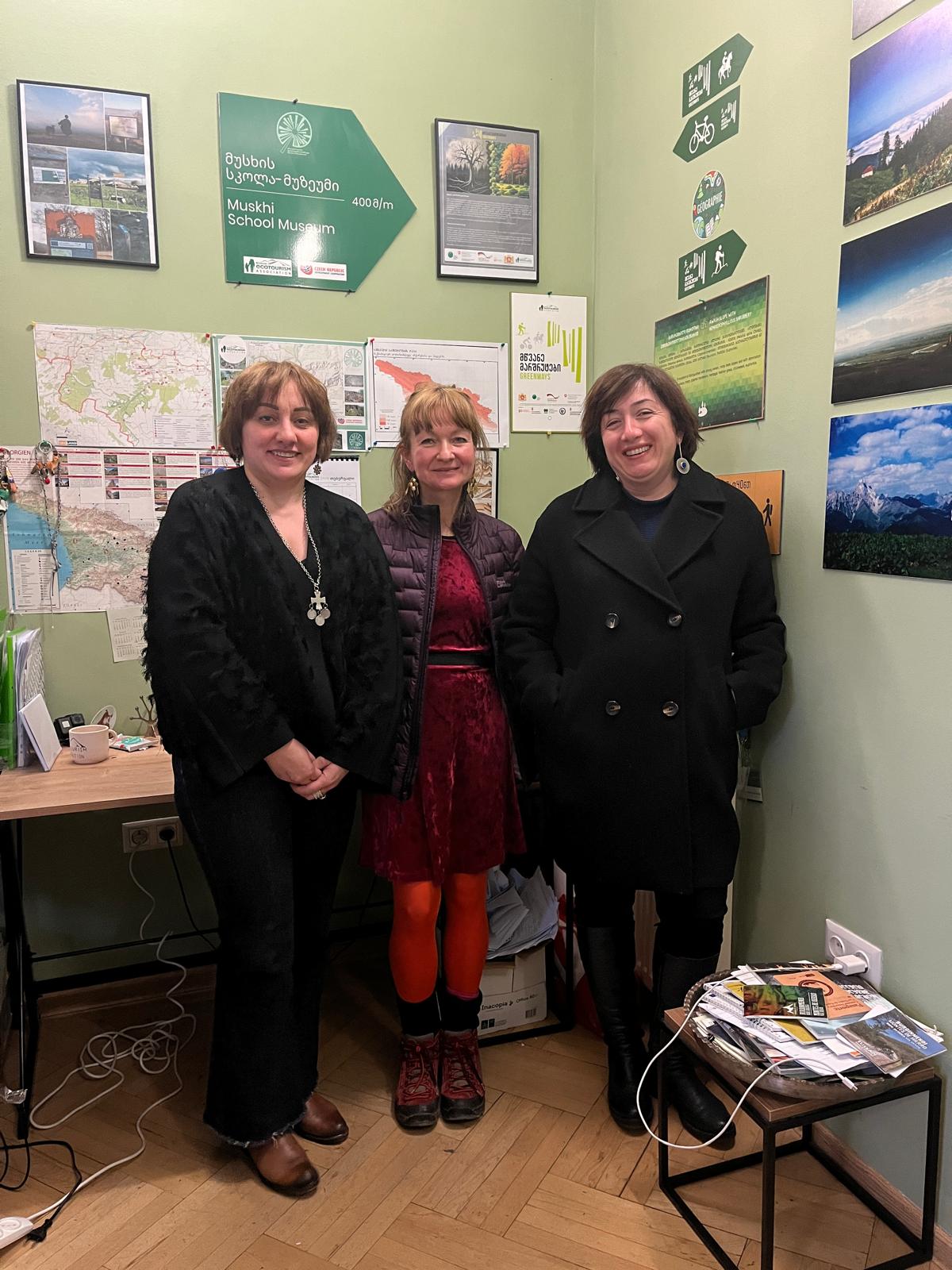
We are at the headquarters of the Georgian Ecotourism Association in Tbilisi, Georgia, in a green office full of pictures and photos from your eco-projects. Please tell us a little bit about the beginnings of your organization.
The Association was born in 2012, growing out of a previous initiative, the Ecotourism Development Centre. From the very beginning, our vision was to bring together people in Georgia who care deeply about sustainability, conservation, and community-based approaches. At that time, there weren’t many guides or examples for managing ecotourism, so we had to shape our own path. Our guiding principle became simple: sustainability means doing everything you can within your capacity, while honoring and respecting the natural resources around you and preserving cultural resources – everything that forms your heritage inherited from your ancestors. Over time, communities began to develop these concepts within their own villages. At the same time, we explored how nature, people, and historical heritage interact, always staying closely connected with the local community. As a result, we realized that we needed a clear concept: a way to help build the whole country, develop a national ecotourism strategy, and move forward.
You are a member-based and service-oriented organisation, focused on bringing knowledge to the members and communities on how to achieve long-term socio-economic prosperity in accordance with sustainable principles.
Yes, we have around 100 members right now, and it is important to work with the small and medium enterprises and organizations that understand and follow the ecological aspects, and that understand the importance of protecting the cultural landscape, which is so unique in Georgia. We create high-quality ecotourism products using the methods based on storytelling and authentic experience.
Right, when creating the authentic ecotourism offer, the key word is “interpretation”!
Yes, the educational part is crucial in ecotourism. During your travel, you visited one of our members’ facilities in Sighnaghi. The owner of the Old Ridge Inn, Ia Tabagari, brought back the intangible culture, which is horse riding, to the abandoned village. She kept, in terms of conservation, everything that was rescuable in this remote area. And she also started to bring back what was forgotten there—such as cooking, gardening, using herbs, etc.—with the help and knowledge of local people from the nearby town and villages who work with her. It is a kind of “going back to nature” true experience. And you are part of this; you are able to be part of this ecosystem.
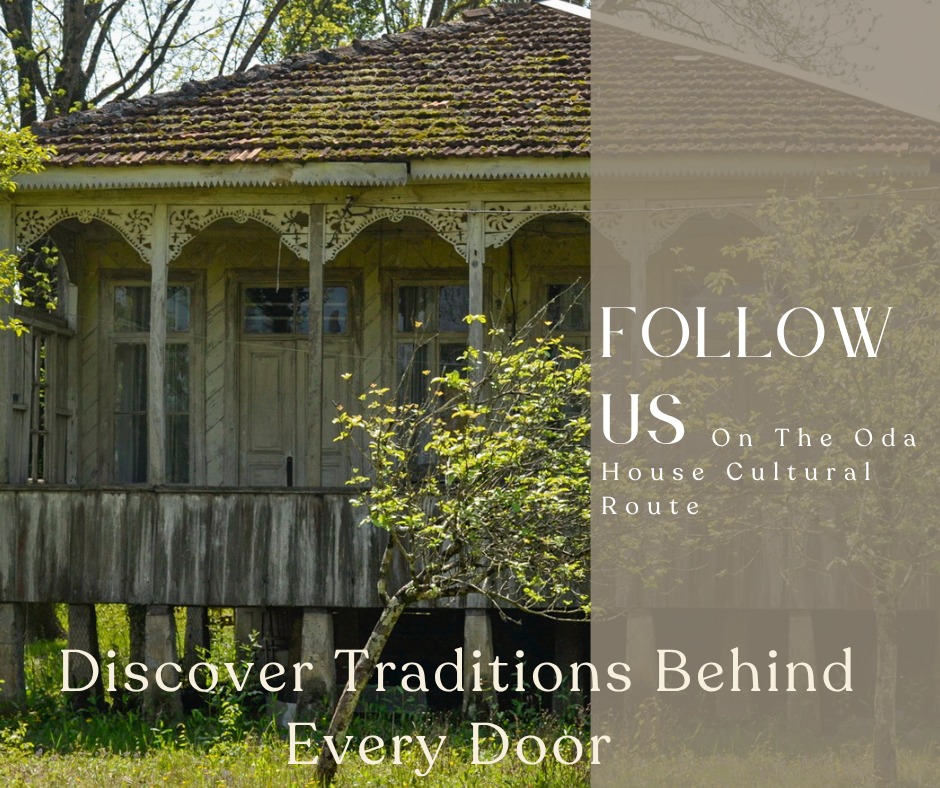
Another beautiful example of storytelling in Georgian ecotourism is the Oda Houses Cultural Route.
When you go to Western Georgia, Oda Houses are kind of an architectural icon of the rural landscape. Unfortunately, this cultural landscape is changing very quickly; houses are being demolished and disappearing from villages. The whole idea behind the project is to show the value of these – sometimes 150-year-old – wooden jewels with characteristic balconies, and in this way to save this heritage, because they are not just buildings; they are a living tradition behind every door.
The project is supported by European funds, as well as by the German Agency for International Cooperation (GIZ) under management of Good Governance for Local Development, EU4ITD – Catalysing Economic and Social Life. Without them, it would be impossible to restore and maintain the Oda Houses and enable people to experience them. I feel that in this way we are all making the world better and more beautiful. And I am very proud of this project when I see how the houses look now and how they looked before – they are unrecognizable. I believe that this is exactly what we mean by responsible travel or sustainable travel.
In this way, the Oda Houses project changes for the better the life and experiences of both hosts and visitors…
Yes, it is about sharing stories, about values, about creating some kind of good harmony in the world. For me, it’s very important that when I see, for example, the people who are traveling and watching those houses, how happy they are experiencing them. How unforgettable it is. I would say, at some point, how important this intercultural communication is. Traveling is not just sightseeing; it is about experiencing – you are having a good-quality time. You learn from your hosts. It is very often a high-intellectual experience as well. It will significantly influence you – these human, slow, and intercultural communications.
And why are they called “Oda”? What does it mean?
The word “Oda” comes from an old Turkish word, and it means something like a hosting room in a bigger house. In Georgia, Oda is a word for a wooden house, which is built without nails. So it is kind of like a “lego” construction. All of them have these beautiful carved balconies, very different from each other and having their own signification – a meaning related to the profession, beliefs, or passions of the people who created them. Some of the houses have three storeys, while others are more modest. In the past, all the villagers used to live in such houses. Today, they are more like the iconic decoration of the rural settlements.
Let’s talk about your newest project – the Georgian Greenways – which is based on your previous experiences working with local communities, developing active ecotravel, and heritage interpretation.
Well, Greenways were always kind of an idea to introduce to Georgia, because the concept of Greenways is to reuse former communication roads as non-motorized green paths. These historic roads were always fascinating. At the crossroads from the west to the east, we had, for example, the famous Silk Road and a network of connecting and supply roads. So the whole idea was to transform them into Greenways, bringing them back to the community, with common respect toward nature and the environment. That was the whole idea, and we started to research where to do it and how to do it.
And you chose three pilot regions for the Greenway project…
Yes, together with our Supporter – the GIZ – we selected three regions that were not touristic, with a low level of visitors, and relatively close to Tbilisi: Akhmeta, Tianeti, and Lanchkhuti. When I got to know the whole European concept of Greenways, I was aware that we would need a lot of development money, but we decided to start with some simple transformations and the creation of green trails – walking, hiking, and horseback riding – that would promote ecotourism and active tourism development in the area.
A very similar approach was used when we started to incorporate Greenways in Central and Eastern Europe…
Yes, the aim was the revitalization of rural communities and giving some ideas to organize the product. We call Greenways “the art of reawakening forgotten roads.” A Greenway is also the art of traveling slowly, allowing every traveler to walk, ride, or cycle along ancient routes and explore a world shaped by nature and history. Every step becomes a chance to listen, to learn, and to perceive the world around. This initiative would be impossible without support of GIZ program – Enabling the Implementation of Georgia’s Forest Sector Reform – ECO.Georgia.
I would also like to ask you about the role of women in your projects. I see many women leaders involved in ecotourism and Greenways…
Yes, do you feel that way as well? It’s women power somehow. I mean, the majority behind the projects are women, but also because the hospitality sector is more based on the competencies of women. The second thing is that if you would like to do something very quickly and very qualitatively, you have to rely on a woman, definitely. But the point is that we are not looking for gender equality (it is somehow natural in Georgia); we are looking for professionalism and competencies. Each of us has different competencies, and we are kind of a value chain within the organisation. So each of us creates something and helps to recreate or create for another one. But of course, women are very engaged toward sustainability and easily understand and feel the value of nature and cultural heritage.
And what is your dream, Natalia?
It will be a existential answer. I want to have a free, democratic country back, to have the right to decide on my own. That is called “tavi su pleba” in Georgian. So I think we need to gain it back.
And this is what we wish for you. Thank you.
Interview conducted in Tbilisi, 13th of February by Dominika Zareba
>>>see more:
ecotourism.ge
greenways.ge
odahouse.net