
 English
 Español
 Français


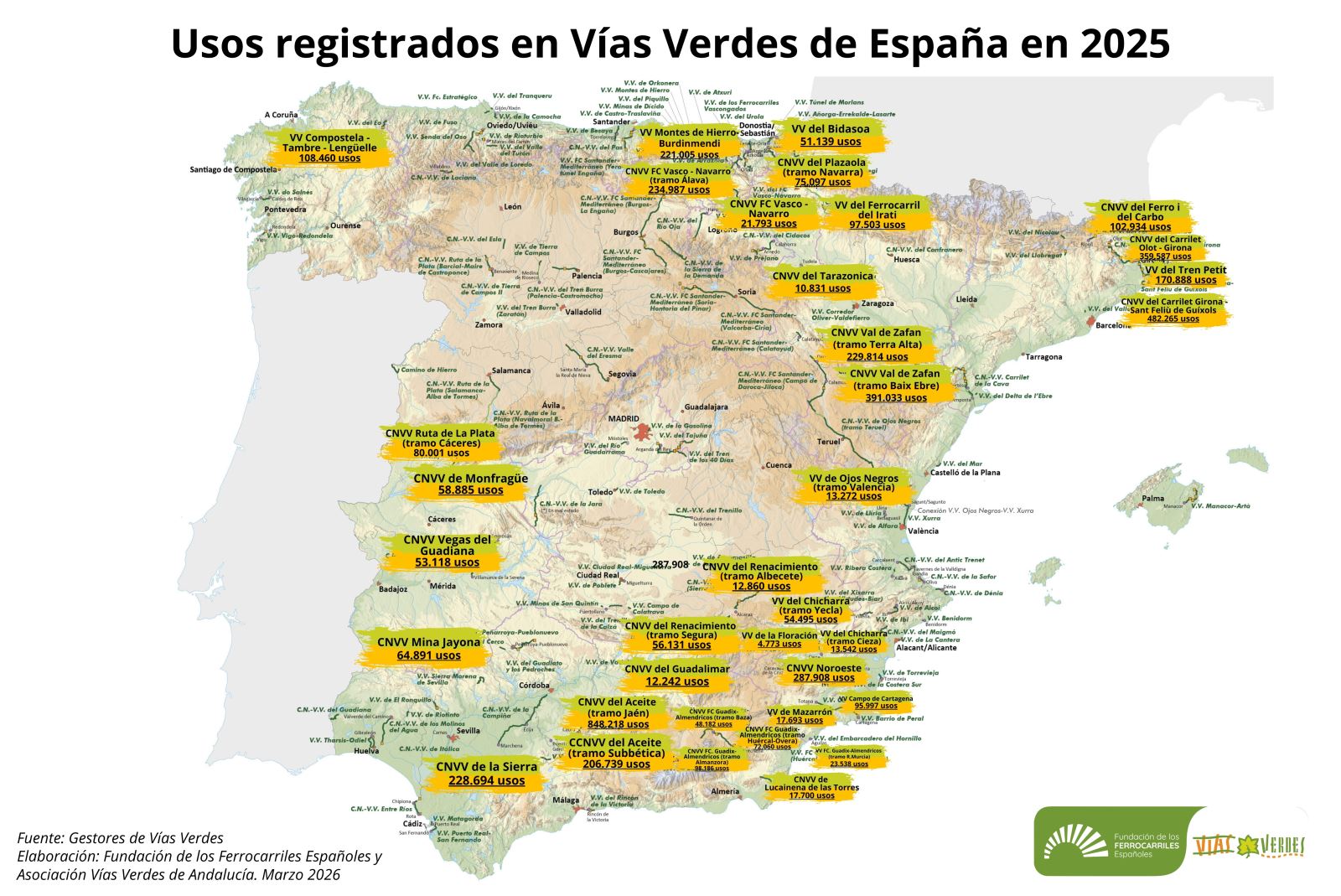
Spanish Greenways continue to attract millions of users, reaching nearly 5 million in 2025
The Spanish Vías Verdes (Greenways) continue to demonstrate strong public interest and use. According to data published by Segittur through the Datastur Sustainability Platform, the 36 monitored Greenways or sections recorded 4,926,481 uses in 2025. These figures represent only around 25% of Spain’s approximately 140 Greenways, indicating the significant scale of their recreational and tourism value.
The most visited routes in 2025 were:
- Camino Natural Vía Verde del Aceite (Jaén section, Andalusia) – 848,218 uses
- Camino Natural Vía Verde del Carrilet Girona–Sant Feliù de Guíxols (Catalonia) – 482,265 uses
- Camino Natural Vía Verde Val de Zafán (Baix Ebre section, Catalonia) – 391,033 uses
The average use among monitored Greenways exceeded 160,000 users per year, although differences between individual routes remain significant.
User profile
Greenways continue to serve primarily as local recreation and active mobility infrastructure:
- 64% of recorded uses were pedestrians
- 30.5% were cyclists
- Around 5.5% were mixed or could not be classified precisely
This confirms that Spanish Greenways are not only cycling routes but also important spaces for walking, leisure, health, and access to nature.
Expansion of monitoring
In 2025, new counters were installed through the “Experimenta Vías Verdes” project, improving knowledge about route usage. Examples include:
- Camino Natural Vía Verde del Renacimiento (Albacete) – 12,860 uses (74.5% pedestrians, 25.5% cyclists)
- Vía Verde de Ojos Negros (Valencia) – 13,272 uses (62% cyclists, the highest cycling share among monitored routes)
Regional highlights
- Andalusia: The Vía Verde del Aceite (Jaén) remained the most used Greenway in Spain. Other successful routes include Vía Verde de la Sierra and the Subbética section of the Vía Verde del Aceite.
- Murcia: The Vía Verde del Noroeste maintained high levels of use, with nearly 290,000 users.
- Basque Country: The Vía Verde del Ferrocarril Vasco Navarro (Álava section) recorded around 235,000 uses, mainly by pedestrians.
- Navarra: Most Greenways increased their use; the Vía Verde del Ferrocarril del Irati had one of the highest shares of walkers (96.4%).
- Catalonia: Most Greenways continued to grow, with particularly strong results on:
- Vía Verde del Tren Petit – 170,888 uses
- Vía Verde Val de Zafán (Terra Alta) – 229,814 uses (60.6% cyclists)
- Vía Verde Val de Zafán (Baix Ebre) – 391,033 uses
- Galicia: The relatively new Vía Verde Compostela–Tambre–Lengüelle continued growing, reaching 108,460 uses.
Importance for sustainable tourism
The data confirms the role of Spanish Greenways as key assets for:
- sustainable and low-impact tourism,
- active lifestyles and healthy mobility,
- rural development,
- reuse of former railway infrastructure,
- connection with natural and cultural heritage.
The creation of the Spanish Greenways Observatory represents an important step toward systematic monitoring of visitor numbers and evidence-based management of this national network.
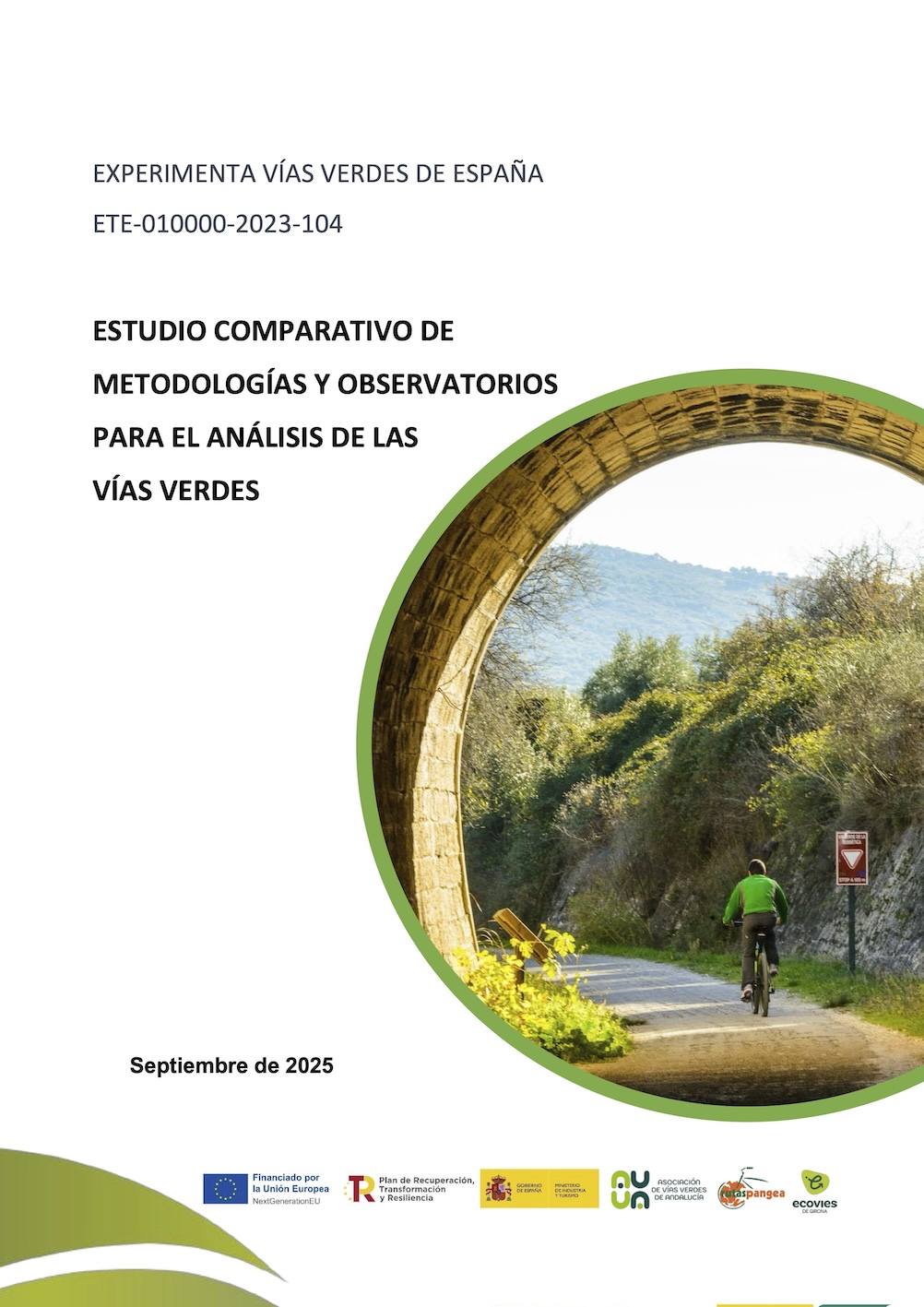
More information – read the publication (in Spanish):
Spanish Greenways continue to be highly valued recreational and tourism resources. In 2025, only 36 monitored routes or sections recorded almost 5 million uses, with walking representing the majority of activities. The most successful routes demonstrate the capacity of Greenways to support sustainable tourism, local economies, and access to natural and cultural heritage. The growing monitoring system provides valuable evidence for improving management and promoting Greenways as strategic infrastructure for active mobility and rural development.